
Table of Contents
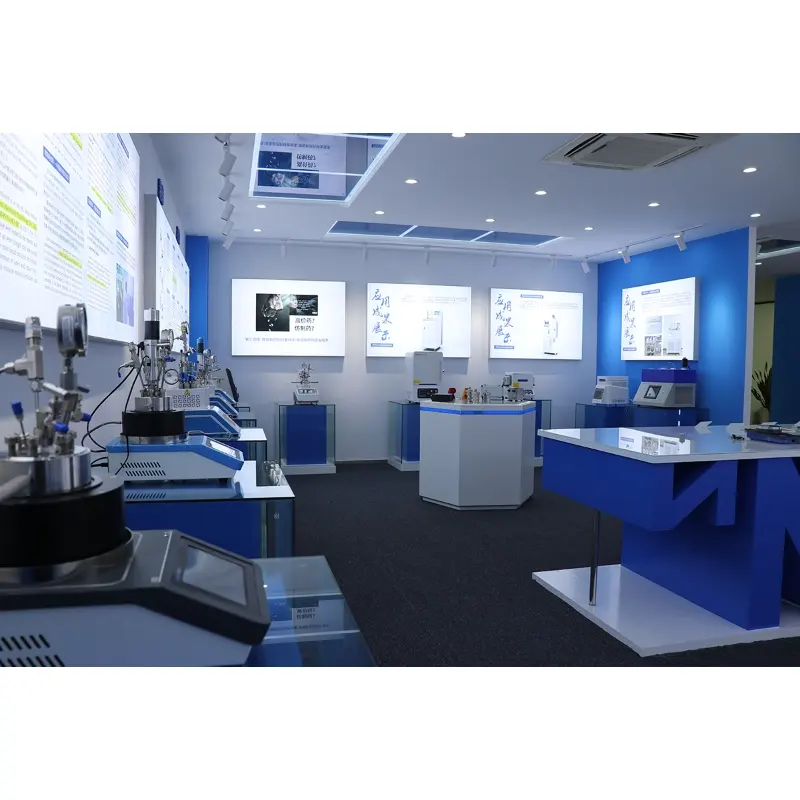
For laboratory photocatalysis, the light source is more than an auxiliary device. Wavelength, optical power, light intensity, and spectral bandwidth all affect how an experiment is set up and controlled. When researchers work with different catalysts and reaction systems, the right light source helps maintain consistent irradiation conditions.
Anhui Kemi Instrument Co., Ltd. develops laboratory equipment for research and synthesis applications. Its photocatalytic instrument range includes high flux photocatalytic reactors, solar simulators, and fixed-wavelength LED photocatalytic lights for applications such as photocatalytic organic synthesis and photocatalytic degradation.
What Is a Fixed Wavelength LED Photocatalytic Instrument?
A fixed wavelength LED photocatalytic instrument uses an LED source designed to provide light at a selected wavelength instead of relying on a broad and less controlled light output. This setup is useful when a photocatalytic reaction needs to be studied under a defined illumination condition.
Wavelength selection becomes particularly important when the optical response of a catalyst is part of the experiment. Researchers can select a specific wavelength and then adjust other variables separately, rather than changing several light conditions at once.
For laboratory studies that require controlled and repeatable illumination, fixed-wavelength LED equipment provides a practical option.
Why Does Wavelength Selection Matter?
Photocatalytic reactions depend on the interaction between light and the catalyst. Different catalysts may respond differently in the ultraviolet, visible, and near-infrared regions. The wavelength used in an experiment should therefore be considered together with the catalyst and reaction system.
During catalyst screening or reaction optimization, researchers may need to test several wavelengths. A photocatalytic instrument with multiple wavelength options gives them more flexibility than a light source limited to a single setting.
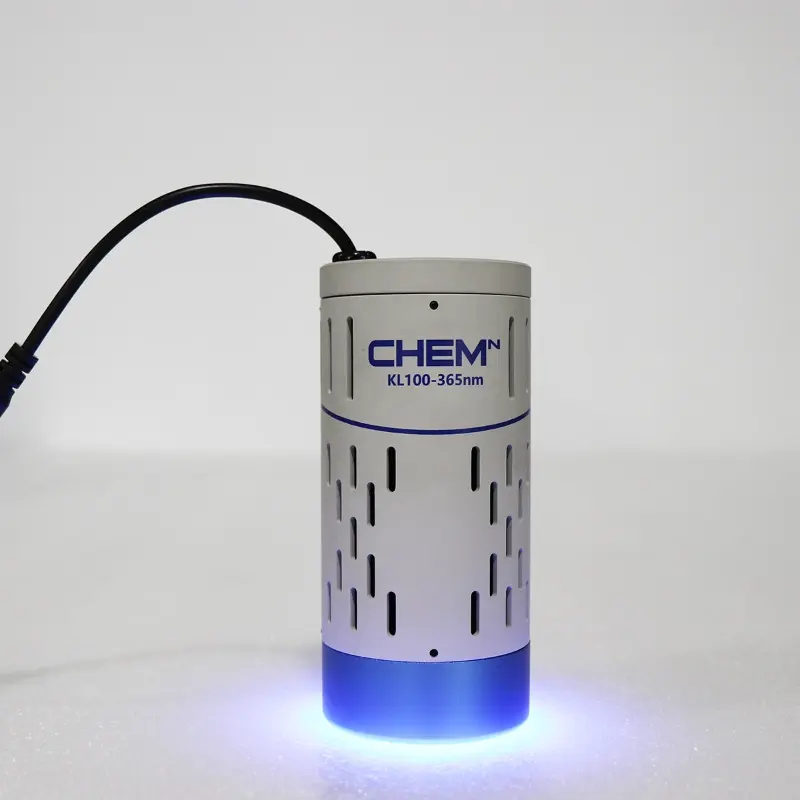
The KL100 fixed-wavelength LED light, for example, provides nine conventional wavelength options: 365, 390, 400, 420, 455, 460, 520, 630, and 730 nm. Customized wavelengths from 255 to 1,650 nm are also available, with options at 5 nm intervals except for certain special wavelengths.
How Does Light Intensity Affect a Photocatalytic Experiment?
Wavelength is only one part of the illumination condition. Light intensity also needs to be controlled when setting up a photocatalytic experiment.
If the light output changes between experiments, comparing the results becomes more difficult. An adjustable light source allows researchers to keep the irradiation level consistent or change it according to the experimental design.
This is one area where a high intensity photocatalytic instrument can be useful. Higher optical output provides more flexibility when a reaction requires stronger irradiation, while adjustable intensity allows researchers to examine how different light levels relate to the reaction.
The KL100 provides 10-grade light intensity adjustment and an LED display for setting and monitoring the light level. Its listed maximum electric power is 40 W, while the maximum optical power and intensity vary with the selected wavelength.
Which Parameters Should Researchers Check?
Choosing an LED light for photocatalysis involves more than looking at electrical power. Several optical and operating parameters should be checked to determine whether the equipment fits the experiment.
| Parameter | What to Consider |
| Wavelength | Whether the selected wavelength matches the intended photocatalytic study |
| Optical power | The available optical output from the light source |
| Light intensity | The irradiation level applied to the reaction |
| FWHM | The spectral bandwidth around the peak wavelength |
| Wavelength options | Whether different wavelengths are available for catalyst screening |
| Adjustment method | Whether light intensity can be changed during experiments |
| Operating temperature | Whether the operating range suits the laboratory environment |
For the KL100, the product data lists a maximum electric power of 40 W, FWHM of 20 nm for the referenced configuration, maximum optical power of 3942 mW, and an operating temperature of 0–45°C. The exact optical parameters vary with wavelength, so the selected wavelength should be taken into account when comparing specifications.
What Makes LED Light Useful for Laboratory Photocatalysis?
LED technology provides a practical way to build laboratory light sources around defined wavelengths. For photocatalytic experiments, this makes it easier to establish a specific and repeatable irradiation condition.
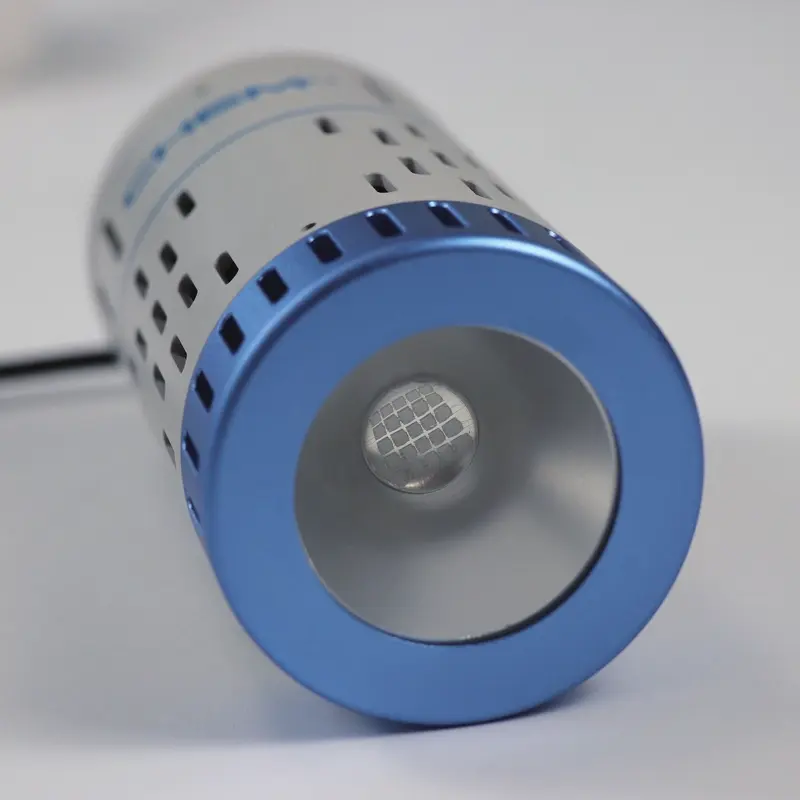
The KL100 uses a high-density matrix LED chip designed to provide uniform illumination with broad coverage. Its lamp cap, reflective tile, and lens are designed for ultraviolet, visible, and near-infrared spectra to reduce light loss and improve light penetration.
These details can matter when researchers need to control how light reaches the reaction system. The nominal wavelength alone does not describe the entire light source.
Fixed Wavelength LED vs. Broad-Spectrum Light Sources
Fixed-wavelength LED equipment and solar simulators are intended for different experimental purposes.
A fixed-wavelength source is useful when the research focuses on a defined wavelength or when researchers need to change wavelengths systematically between experiments. A solar simulator, in comparison, provides a broader spectral output for experiments that require simulated solar illumination.
Kemi’s photocatalytic instrument range includes both fixed-wavelength LED photocatalytic lights and solar simulators. The product category currently lists solar simulator models covering a 400–1000 nm spectrum, along with multiple fixed-wavelength LED products.
The choice depends on the experimental setup: some studies require a defined wavelength, while others need a broader spectral range.
Where Are Fixed Wavelength LED Photocatalytic Instruments Used?
Fixed-wavelength LED equipment can support several types of laboratory photocatalysis research. Kemi identifies photocatalytic organic synthesis and photocatalytic degradation as key application areas for its products.
Typical laboratory work may include:
- Comparing catalyst behavior under different wavelengths
- Studying photocatalytic organic synthesis
- Evaluating photocatalytic degradation
- Examining the relationship between light intensity and reaction conditions
- Screening illumination conditions during catalyst development
For these applications, selecting a defined wavelength and adjusting the light intensity can help researchers establish consistent experimental conditions.
How Should You Choose the Right Configuration?
The required configuration depends on the experiment rather than on a single specification.
Start by determining the wavelength range required by the catalyst or research project. Then consider the required optical power and light intensity. If the project involves wavelength screening, a system with multiple wavelength options can reduce the need to switch between different light sources.
FWHM, operating temperature, physical dimensions, and intensity adjustment are also worth checking. These details can affect how easily the light source fits into an existing reaction system.
A suitable photocatalytic instrument should provide the optical conditions required for the experiment while remaining practical to operate and adjust.
FAQ
1. What is a fixed wavelength LED photocatalytic instrument?
It is a laboratory light source designed to provide illumination at a selected wavelength for photocatalytic research. It is suitable for experiments that require defined and repeatable irradiation conditions.
2. What wavelengths are available for Kemi’s LED photocatalytic light?
The KL100 offers nine conventional wavelengths: 365, 390, 400, 420, 455, 460, 520, 630, and 730 nm. Customized wavelengths from 255 to 1,650 nm are also available under specified conditions.
3. Can the light intensity be adjusted?
Yes. The KL100 provides 10-grade light intensity adjustment and an LED display, allowing researchers to change the irradiation level during experiments.
4. What is the difference between a fixed-wavelength LED and a solar simulator?
A fixed-wavelength LED is designed around a selected wavelength, while a solar simulator provides a broader spectrum. The appropriate option depends on whether the experiment requires controlled single-wavelength illumination or a wider spectral range.
5. What applications are supported by these instruments?
The product range is mainly intended for photocatalytic research, including photocatalytic organic synthesis and photocatalytic degradation.
Conclusion
A fixed-wavelength LED system gives researchers direct control over an important variable in photocatalytic experiments: illumination. Wavelength, optical power, light intensity, and spectral bandwidth should all be considered when establishing the experimental setup.
With fixed-wavelength LED photocatalytic lights, solar simulators, and high flux photocatalytic reactors in its product range, Anhui Kemi Instrument Co., Ltd. provides different equipment options for laboratory photocatalysis research. The appropriate configuration can be selected according to the required wavelength, irradiation level, and experimental setup.