
Table of Contents
In the competitive landscape of chemical synthesis and material science, the equipment you choose dictates the quality of your data. For laboratories and pilot plants focusing on photocatalysis, the transition from basic setups to Temperature-Regulated High-Flux Reactors is not just an upgrade—it is a necessity for standardization.
As global demand for precise photochemical data rises—from pharmaceutical API synthesis to hydrogen energy research—procurement managers and researchers face a critical question: How do you select the right reactor that balances intense light exposure with strict thermal control?
Understanding the Thermal Challenge
“High Flux” implies a dense delivery of photons to the reaction medium, which accelerates kinetics. However, high-intensity light sources inevitably generate significant heat. Without active regulation, reaction temperatures can spike unpredictably.
When choosing a reactor, the primary criterion is its ability to maintain an isothermal environment. A superior system utilizes a double-jacketed design that allows coolant to circulate without obstructing the optical path, ensuring that the reaction energy comes from photons, not thermal runaway.
Critical Selection Parameters
To ensure you are investing in industrial-grade equipment, focus on these three technical pillars:
- Optical Material Efficiency: The vessel must be constructed from high-purity borosilicate or quartz. Lower-grade glass filters out UV wavelengths and suffers from thermal shock.
- Fluid Dynamics & Mixing: Look for designs that support magnetic or overhead stirring with baffles. Uniform suspension is critical for heterogeneous catalysis.
- Chemical Resistance: The sealing mechanism (O-rings, flanges) must be robust (e.g., PTFE) to withstand harsh organic solvents during long operational cycles.
Technical Comparison: Standard vs. Temperature-Regulated
To illustrate the value of investing in a specialized system, compare the performance metrics of a standard glass vessel against a professional Temperature-Regulated High-Flux unit:
| Feature | Standard Photochemical Vessel | Professional Temperature-Regulated High-Flux Reactor |
| Temperature Control | Passive (Ambient cooling only) | Active Double-Jacket Circulation ($\pm 0.5^\circ C$) |
| Light Transmittance | Variable (often <80% in UV) | High (>90% with optical grade Quartz/Glass) |
| Heat Management | High risk of solvent evaporation | Zero evaporation loss (Closed Loop System) |
| Reaction Repeatability | Low (Weather/Lab temp dependent) | High (Standardized Process Conditions) |
| Seal Integrity | Basic ground glass joints | Industrial PTFE Flanges & Corrosion-Resistant Seals |
| Pressure Tolerance | Low (Atmospheric only) | Moderate (Designed for internal pressure stability) |
Applications Demanding This Technology
This level of precision is currently the “Gold Standard” for:
- Medicinal Chemistry: Preventing thermal degradation of sensitive intermediates.
- Environmental Science: simulating exact solar conditions for pollutant degradation.
- Nanomaterial Synthesis: Ensuring uniform crystal growth rates via temperature control.
Kemi Lab Advantage
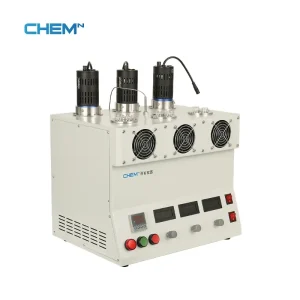
For laboratories seeking to eliminate variables and maximize yield, we highly recommend the Kemi Lab Temperature-Regulated High-Flux Photocatalytic Reactor.
Engineered specifically for high-demand environments, this system integrates high-transmittance optical glass with a precision-engineered thermal jacket. It addresses the common pain points of “shielding effects” and “thermal instability,” offering a robust solution that supports both batch consistency and operational safety. By choosing Kemi Lab, you are not just buying glass; you are investing in the reproducibility of your research.
Explore the Kemi Lab High-Flux Series Specifications Here
FAQ
Why is “flux” such a critical factor in selecting a reactor?
Flux determines the rate of photon absorption. A high-flux reactor minimizes the reaction time required to achieve high conversion rates, which is essential for process efficiency and scaling up experiments.
How does the double-jacket design maintain temperature without blocking light?
The jacket is constructed from the same high-transmittance material as the inner vessel. When used with a transparent thermal fluid (like water or silicone oil), the refractive indices are matched to allow maximum light penetration while effectively removing or adding heat.
Can I use this reactor for long-term continuous experiments?
Yes. The specific focus on corrosion-resistant sealing (PTFE) and stable thermal regulation makes it ideal for experiments running for 24-72 hours or more, ensuring the solvent volume and temperature remain constant throughout.
Is it difficult to clean or switch catalysts in this reactor?
No. The design typically features a wide-mouth flange or accessible ports, allowing for easy disassembly, cleaning, and sterilization between batches, which is a key requirement for pharmaceutical R&D.
What is the advantage of your reactor’s sealing system over standard glassware joints?
Standard ground joints often seize up or leak under pressure/heat. Our system uses specialized mechanical sealing with chemical-resistant clamps, ensuring a vacuum-tight seal that prevents toxic vapor leaks and protects the operator.