
Table of Contents
Stirring is an important part of many high-pressure laboratory reactions. It affects how well reactants mix, how evenly heat is distributed, and how effectively different phases come into contact during a reaction. These factors become more noticeable when working with gases, solid catalysts, viscous liquids, or reactions carried out at high temperatures and pressures.

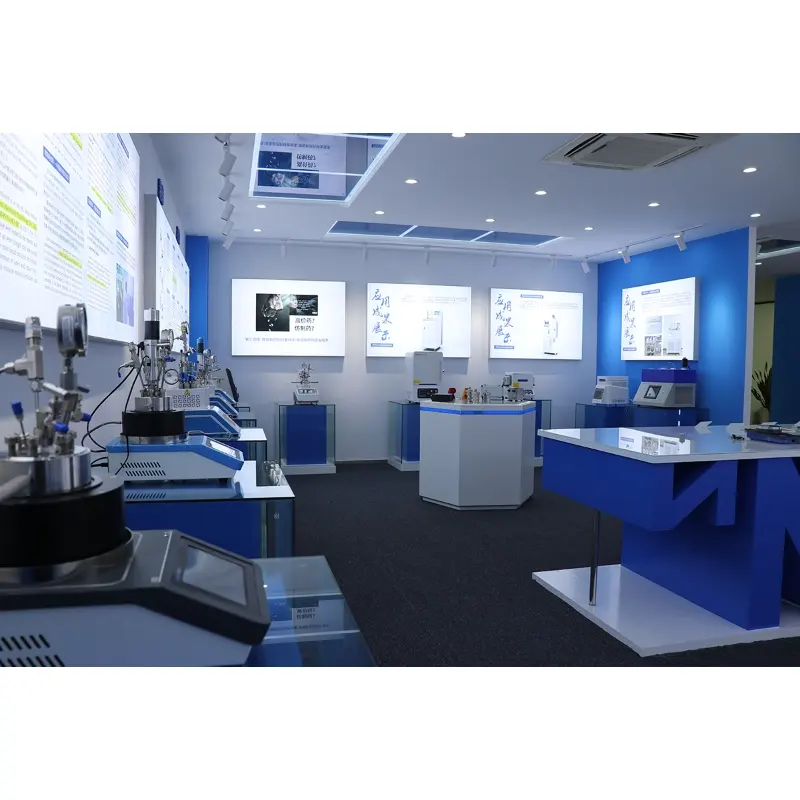
Anhui Kemi Instrument Co., Ltd. offers laboratory autoclave reactors with both magnetic and mechanical stirring configurations. The two designs are used for different experimental requirements, so the stirring method should be considered along with reaction volume, material properties, temperature, pressure, and the type of reaction being studied.
Why Does Stirring Matter in an Autoclave Reactor?
Once an autoclave reactor is sealed, the reaction takes place in a closed environment. The reactants cannot be manually mixed or adjusted during the experiment. The stirring system therefore plays a major role in keeping the reaction medium moving throughout the process.
Good mixing is particularly useful when:
- Two or more liquid reactants need to remain evenly distributed
- A solid catalyst needs to stay suspended
- Gas needs to come into contact with a liquid
- The reaction medium has noticeable viscosity
- A consistent temperature is needed throughout the vessel
- Researchers need repeatable experimental results
Without enough agitation, some areas of the vessel may have different concentrations or temperatures from others. This does not necessarily mean that the reaction will fail, but it can make the results less consistent.
Magnetic Stirring and Mechanical Stirring: What Is the Difference?
The two main stirring methods found in laboratory autoclave reactors are magnetic stirring and mechanical stirring. They work in different ways and are suited to different laboratory conditions.
| Stirring Method | Main Characteristics | Typical Considerations |
| Magnetic Stirring | Uses a magnetic coupling to drive the stir bar inside the vessel | Often used for small-volume laboratory reactions |
| Mechanical Stirring | Uses a motor-driven shaft and impeller | Offers greater flexibility for stronger or more controlled mixing |
| Parallel Stirring | Several reaction vessels operate at the same time | Useful for screening and comparing different reaction conditions |
There is no universal winner between magnetic and mechanical stirring. The better option depends on what is inside the reactor and what the experiment is intended to achieve.
For a small liquid-phase reaction, a compact magnetic stirring setup may be sufficient. When the reaction involves higher viscosity, larger working volumes, or solid materials, mechanical stirring may offer more control over the mixing process.
How Does Stirring Affect Reaction Uniformity?
1. Reactant Concentration
Reactants do not always distribute evenly on their own, especially when the reaction medium contains liquids with different properties or suspended solids.
Stirring keeps the contents moving and reduces concentration differences within the vessel. This is useful when the reaction rate is sensitive to the concentration of one or more reactants.
For laboratory research, better mixing can also make it easier to compare results from repeated experiments.
2. Temperature Distribution
Heating a sealed reactor does not automatically mean that every part of the reaction medium reaches exactly the same temperature.
As the reaction medium moves, heat is transferred through the vessel more evenly. Stirring therefore works together with the heating system to maintain a more consistent reaction environment.
This matters particularly for reactions where a small temperature change can affect the reaction rate or product formation.
3. Gas-Liquid Contact
Some high-pressure reactions involve hydrogen, nitrogen, or other gases. In these cases, the gas needs to interact with the liquid reaction medium.
Stirring breaks up and redistributes the gas within the liquid, increasing the contact between the two phases. The actual result depends on the reactor design, gas pressure, liquid properties, and stirring conditions, but the stirring system is an important part of the overall process.
4. Solid Suspension
Catalysts and other solid materials are commonly used in laboratory reactions. If the particles settle quickly, the amount of solid in contact with the liquid can change during the experiment.
Mechanical stirring is often considered when stronger agitation is needed to keep solid particles distributed. However, the required stirring conditions depend on particle size, concentration, density, liquid viscosity, and reactor volume.
Does Reactor Volume Change Stirring Performance?
Yes. Reactor volume has a direct relationship with mixing.
A stirring speed that works well in a small vessel may not produce the same result in a larger reactor. As the working volume increases, the movement of the reaction medium changes, and factors such as impeller size, vessel geometry, viscosity, and stirring speed become more important.
This is why laboratory autoclave reactors are available in different capacities. Smaller vessels are useful when only a limited amount of material is available, while larger reactors may be needed for synthesis work that requires more reaction material.
The working volume is therefore worth considering when comparing stirring configurations. Looking only at the maximum reactor capacity does not tell the whole story.
Which Stirring Method Is Better for Different Reactions?
The answer depends on the reaction rather than the reactor name.
Small-Volume Liquid Reactions
For small-scale experiments with relatively low-viscosity liquids, magnetic stirring is often a practical choice. The design is compact and well suited to many routine laboratory reactions.
High-Viscosity Reactions
Viscous materials are harder to move through the vessel. In these cases, mechanical stirring may provide more control over the mixing process, depending on the reactor and impeller design.
Reactions with Solid Catalysts
When a solid catalyst needs to remain suspended, the stirring system needs to provide enough movement to limit settling. Mechanical stirring may be preferred for some of these applications, particularly when stronger agitation is required.
Gas-Liquid Reactions
Gas-liquid reactions require good contact between the two phases. Stirring affects gas dispersion and the movement of the liquid, so the stirring configuration should be considered together with pressure, gas flow, liquid properties, and reaction conditions.
Parallel Experiments
When several reaction conditions need to be tested, parallel autoclave reactors can save time compared with running each experiment separately. Using several vessels also makes it easier to compare variables such as temperature, catalyst loading, or reactant concentration.
What Should You Consider When Comparing Stirring Performance?
Stirring speed is only one part of the picture. Before choosing a reactor configuration, researchers should look at the complete reaction system.
Reaction volume:
The stirring system should match the actual working volume rather than only the nominal capacity of the vessel.
Viscosity:
Higher-viscosity materials usually require more attention to the mixing method and stirring power.
Solid content:
If catalysts or other particles are present, consider whether the stirring system can keep them adequately distributed.
Gas involvement:
For gas-liquid reactions, the ability to promote contact between the phases becomes more important.
Temperature and pressure:
The stirring configuration must be designed for the intended operating range of the reactor.
Reaction time:
Long experiments require stable stirring throughout the entire process, not just during the initial mixing stage.
Experimental purpose:
A reactor used for catalyst screening may have different requirements from one used for material synthesis or scale-up studies.
Magnetic Stirring vs. Mechanical Stirring at a Glance
The following comparison gives a simple overview of the main differences:
| Factor | Magnetic Stirring | Mechanical Stirring |
| System design | Compact | Motor and shaft-based design |
| Stirring connection | Magnetic coupling | Direct shaft and impeller |
| Small-volume work | Commonly used | Available depending on configuration |
| Higher-viscosity media | Depends on the application | Often provides greater mixing flexibility |
| Solid-containing reactions | Depends on stirring capacity | Suitable for applications requiring stronger agitation |
| Parallel testing | Available in selected systems | Available in parallel reactor configurations |
| Configuration options | Designed for specific laboratory needs | Broad range of mixing configurations |
These differences should be viewed as general guidelines. Actual performance depends on the reactor structure and the properties of the reaction material.
How Can the Stirring Method Affect Experimental Results?
Suppose two experiments use the same reactants, temperature, and pressure but different stirring conditions. The results may still differ if the mixing behavior is significantly different.
Poor mixing may lead to:
- Uneven reactant concentration
- Local temperature differences
- Incomplete contact between phases
- Catalyst settling
- Longer reaction times
- Differences between repeated experiments
This does not mean that maximum stirring speed should always be the goal. Excessive agitation may add unnecessary energy or create other problems without improving the reaction.
The practical goal is to find a stirring condition that provides adequate mixing for the specific reaction.
Choosing the Right Reactor Configuration for Laboratory Work
Stirring should not be considered separately from the rest of the reactor.
For example, a small liquid-phase experiment may place more emphasis on compact magnetic stirring, while a larger synthesis involving viscous materials may require a mechanical stirring system. A gas-liquid reaction may require a different setup again.
Other factors such as reactor material, working volume, pressure rating, temperature range, sampling requirements, and cooling arrangements also affect the final configuration.
The magnetic stirring autoclave reactor range from Anhui Kemi Instrument Co., Ltd. includes magnetic stirring and mechanical stirring designs, as well as different capacities and material options. This allows the reactor configuration to be matched more closely to the experimental conditions rather than using the same setup for every application.
Frequently Asked Questions
1. Does a higher stirring speed always improve an autoclave reaction?
No. Higher speed does not automatically produce better results. The required speed depends on the viscosity, working volume, solid content, gas-liquid interaction, and other characteristics of the reaction.
2. When is magnetic stirring a practical choice?
Magnetic stirring is often practical for smaller-volume reactions, particularly when the reaction medium is not highly viscous and does not contain a large amount of solid material.
3. When should mechanical stirring be considered?
Mechanical stirring is worth considering when the reaction requires stronger agitation, involves higher viscosity, contains suspended solids, or uses a larger working volume. The exact requirement depends on the reactor design and reaction conditions.
4. Does stirring affect gas-liquid reactions?
Yes. Stirring influences how gas is dispersed through the liquid and how much contact occurs between the two phases. This can affect mass transfer and the overall reaction process.
5. Does reactor size affect stirring?
Yes. Increasing reactor volume changes the movement of the reaction medium. Impeller design, stirring speed, vessel geometry, and fluid properties all become relevant when the working volume increases.
6. Is magnetic stirring or mechanical stirring better?
Neither method is best for every application. Magnetic stirring is often convenient for smaller laboratory reactions, while mechanical stirring provides more options when stronger or more controlled mixing is required.
Conclusion
Stirring has a direct effect on how reactants move, how heat is distributed, and how different phases interact inside an autoclave reactor. Magnetic and mechanical stirring each have a place in laboratory research, but the right choice depends on the reaction rather than simply the reactor size or pressure rating.
Before selecting a configuration, consider the working volume, viscosity, solid content, gas involvement, temperature, pressure, and purpose of the experiment. A stirring system that matches these conditions is more likely to provide stable mixing and repeatable results.
With laboratory reaction equipment covering different stirring methods, capacities, and materials, Anhui Kemi Instrument Co., Ltd. supports researchers working with a wide range of high-pressure reaction requirements. A well-matched reactor configuration can make experimental work more consistent and easier to reproduce.