
Table of Contents
In high-temperature laboratory work, reaching the target temperature is only one part of the process. What matters just as much is whether the sample is actually exposed to a stable and even temperature.
For example, a furnace may be set to 1000°C, but the temperature near the center of the chamber may not be exactly the same as the temperature near the walls or at the ends of the heating zone. For some materials and processes, this difference can affect the final result.
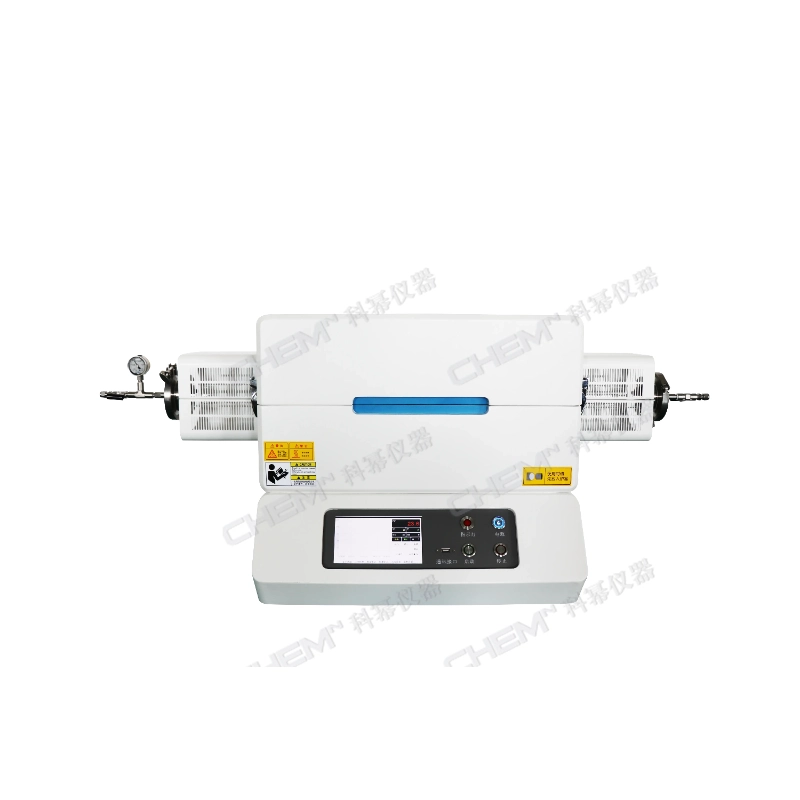
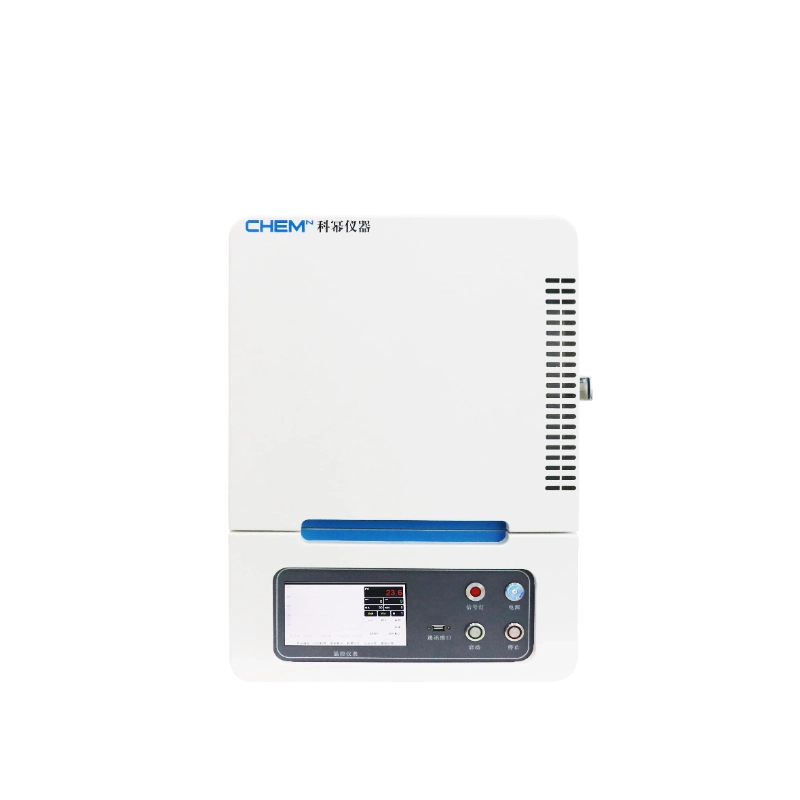

That is why heating uniformity deserves attention when choosing and using a high temperature furnace. It can influence heat treatment, calcination, sintering, annealing, ceramic processing, and other laboratory processes where temperature needs to be controlled within a certain range.
Anhui Kemi Instrument Co., Ltd. supplies laboratory high temperature furnaces in different configurations, including muffle furnaces and tube furnaces. Depending on the application, researchers can work with different chamber sizes, temperature ranges, heating zones, and atmosphere conditions.
What Is Heating Uniformity?
Heating uniformity describes how evenly temperature is distributed across the working area of a furnace.
Take a simple example. If a furnace is set to 1000°C, but one part of the chamber is at 980°C while another is at 1020°C, the samples in those two positions are not being processed under exactly the same conditions.
A small temperature difference may not matter for every application. But when a material is sensitive to temperature, even a relatively small variation can affect the result.
Heating uniformity becomes more important when:
- Several samples are processed at the same time
- The material has a narrow processing temperature range
- Heat treatment conditions need to be repeated
- Different samples need to be compared
- The process involves phase changes or other temperature-sensitive reactions
Why Does Heating Uniformity Matter?
The temperature shown on the controller is usually measured at a specific point. It does not necessarily mean that every part of the furnace chamber is at exactly the same temperature.
If there are significant differences within the heating area, samples may experience different thermal conditions.
Depending on the application, this may affect:
- Reaction rates
- Phase transformation
- Sintering behavior
- Crystallization
- Material structure
- Oxidation or reduction
- Weight loss
- Final material properties
For research work, repeatability is often just as important as reaching the required temperature. If the thermal conditions change from one sample position to another, it becomes harder to determine whether a difference in results comes from the material itself or from the heating conditions.
What Affects Temperature Uniformity in a High Temperature Furnace?
1. Heating Element Arrangement
Heating elements determine where heat enters the furnace. Their position and distribution have a direct effect on the temperature inside the chamber.
If heating is concentrated in certain areas, temperature differences can develop. A well-designed heating system distributes heat across the working area more evenly.
This becomes more challenging as the heating chamber gets longer or larger, since more space has to be brought to the required temperature.
2. Furnace Chamber Design
The chamber itself also affects temperature distribution.
Chamber dimensions, insulation, heating element placement, and the position of the sample all influence how heat moves through the furnace.
A larger chamber is not automatically better. If the available space is much larger than the actual sample area, more attention may be needed to the effective heating zone and temperature distribution.
3. Heating Zone Length
Heating zone length is especially relevant when using a tube furnace.
A tube furnace may have a longer tube than the area in which the temperature remains highly uniform. The effective heating zone is therefore more useful when considering where a sample should be placed.
For processes that require a specific and stable temperature over a certain length, the size and location of the heating zone can make a noticeable difference.
4. Insulation
Heat loss through the furnace walls affects both energy consumption and temperature stability.
Good insulation reduces heat loss and helps the furnace maintain the required temperature. At higher temperatures, insulation becomes even more important because the temperature difference between the inside and outside of the furnace is greater.
Insulation alone does not determine uniformity, but it is part of the overall thermal design.
5. Temperature Control
The control system determines how the furnace responds when the measured temperature moves above or below the setpoint.
The location of the thermocouple matters as well. A sensor measures temperature at its own position, so the displayed value may not represent the temperature at every point where samples are placed.
For this reason, temperature control and temperature uniformity should be considered as two related but different aspects of furnace performance.
Does Sample Position Affect the Results?
Yes.
The location of a sample inside the furnace can affect the temperature it experiences. Areas close to heating elements, chamber walls, or the ends of the heating zone may behave differently from the central working area.
When several samples are processed together, it is useful to keep their positions consistent between experiments. This reduces one possible source of variation.
Researchers should also consider the size of the sample holder and the spacing between samples. A heavily loaded chamber may not behave in exactly the same way as a lightly loaded one.
In practice, the goal is not to use every available part of the furnace. It is to place samples within the area that provides the temperature conditions required for the process.
Muffle Furnace vs. Tube Furnace: What About Heating Uniformity?
Muffle furnaces and tube furnaces have different chamber designs, so temperature uniformity needs to be considered in different ways.
| Furnace Type | Heating Environment | Main Uniformity Considerations | Typical Applications |
| Muffle Furnace | Open chamber | Chamber size, heating elements, insulation, sample position | Calcination, heat treatment, ceramic processing, ash testing |
| Tube Furnace | Samples are placed inside a tube | Heating zone length, tube position, gas flow, sample location | Material synthesis, heat treatment, controlled-atmosphere processing |
| Multi-Zone Tube Furnace | Separate heating zones | Temperature distribution between different zones and zone control | Processes requiring different or closely controlled temperature zones |
A muffle furnace is convenient when samples need to be placed directly inside an open chamber. A tube furnace is more appropriate for many processes that require a defined heating zone or a controlled atmosphere.
Neither design is automatically better in terms of heating uniformity. The right choice depends on the process and the conditions the sample needs.
Does Maximum Temperature Tell You How Well a Furnace Performs?
Not by itself.
A furnace rated to 1200°C, for example, is designed to operate up to that temperature under its specified conditions. That specification does not tell you how evenly the temperature is distributed across the working area.
When comparing high temperature furnaces, it is worth looking at several specifications together.
| Performance Factor | What It Tells You |
| Maximum temperature | The upper operating temperature |
| Temperature uniformity | How evenly temperature is distributed |
| Temperature stability | How well the furnace maintains the setpoint over time |
| Heating rate | How quickly the furnace reaches the required temperature |
| Heating zone | The area available for controlled heating |
| Chamber size | The available space for samples |
| Temperature control | How the furnace responds to temperature changes |
| Atmosphere control | Whether the process can be carried out under vacuum or a selected gas atmosphere |
This gives a better picture of actual furnace performance than looking at maximum temperature alone.
How Can Temperature Consistency Be Improved During Use?
The furnace itself is only part of the equation. The way it is loaded and operated also matters.
Use the effective heating area.
Place samples within the part of the chamber or tube where temperature is known to be suitable for the process.
Avoid unnecessary overloading.
A large number of samples packed closely together can change heat transfer inside the furnace.
Keep sample positions consistent.
For repeated experiments, using similar sample positions makes comparisons easier.
Allow enough time for the sample to heat through.
The furnace controller may reach the setpoint before the material at the center of a sample reaches the same temperature.
Pay attention to sample holders.
Their material, size, and position can affect how heat reaches the sample.
Use the appropriate furnace design.
If the process requires controlled gas flow or a defined heating zone, a tube furnace may be a better fit than an open-chamber furnace.
When Is Heating Uniformity Especially Important?
Not every laboratory heating process requires extremely tight temperature control.
For some simple drying or general heating work, a moderate temperature variation may have little effect. More demanding processes are different.
During sintering, for example, temperature affects densification and material structure. During calcination, it can affect decomposition and phase formation. In heat treatment, temperature influences properties such as hardness and microstructure.
For these applications, knowing the temperature around the sample is more useful than relying only on the number displayed on the controller.
How Does Furnace Configuration Affect Performance?
The furnace should be considered as a complete system rather than a collection of individual specifications.
A compact muffle furnace may be sufficient for small samples and general heat treatment. A larger furnace may be needed for greater sample capacity. A tube furnace may be preferable when the experiment requires a controlled atmosphere, a defined heating zone, or gas flow through the sample area.
Depending on the process, researchers may also need:
- Higher operating temperatures
- Multiple heating zones
- Vacuum operation
- Inert gas protection
- Controlled gas flow
- Specific tube materials
- Different chamber capacities
The high temperature furnace range from Anhui Kemi Instrument Co., Ltd. includes muffle furnace and tube furnace configurations for different laboratory heating and material-processing requirements. The available designs cover different temperature ranges, chamber sizes, heating zones, and atmosphere conditions.
Frequently Asked Questions
1. Is maximum temperature the most important specification of a high temperature furnace?
No. Maximum temperature only tells you the upper operating range. Temperature uniformity, stability, heating rate, chamber size, heating zone, and atmosphere control may be more important for a specific process.
2. What is the difference between temperature stability and temperature uniformity?
Temperature stability refers to how well the furnace maintains a selected temperature over time. Temperature uniformity refers to the temperature difference between different locations within the heating area.
A furnace may maintain a stable temperature at the sensor location while still having temperature differences elsewhere in the chamber.
3. Does sample position affect heating results?
Yes. Samples placed near heating elements, walls, or the ends of a heating zone may experience different temperatures from those placed in the central working area. Consistent sample placement is useful when experiments need to be compared.
4. Is a tube furnace more uniform than a muffle furnace?
Not necessarily. The two furnace types have different designs and are used for different purposes. A tube furnace may offer a defined heating zone, while a muffle furnace provides an open chamber. Actual temperature uniformity depends on the furnace design and operating conditions.
5. Does furnace size affect temperature uniformity?
It can. A larger chamber contains more space to heat, so the heating system and insulation need to be designed accordingly. Chamber size alone does not determine uniformity.
6. Why does heating uniformity matter when processing multiple samples?
If samples in different positions experience different temperatures, their results may vary even when all other conditions are the same. Better temperature uniformity makes it easier to compare samples under similar thermal conditions.
Conclusion
A furnace reaching the required temperature does not necessarily mean that every sample is receiving the same temperature. Heating element arrangement, chamber design, insulation, heating zone length, temperature control, and sample position all affect temperature distribution.
For processes such as sintering, calcination, heat treatment, and material synthesis, these differences can influence the final result. That makes heating uniformity an important part of high temperature furnace performance, alongside maximum temperature and heating rate.
The right furnace depends on what the experiment actually requires. By considering temperature uniformity together with chamber size, heating zone, atmosphere, and control requirements, researchers can select a setup that better matches their process.
Anhui Kemi Instrument Co., Ltd. offers different muffle furnace and tube furnace configurations for laboratory applications, giving researchers options for different temperature and processing requirements.